

Simplifying Automation with VFDs in Smart Factories

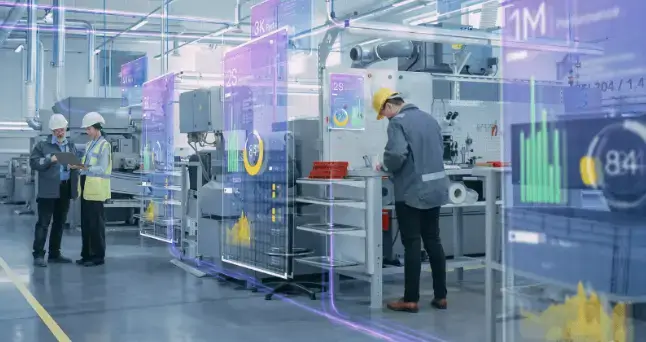
As manufacturing evolves into the age of Industry 4.0, automation is becoming the cornerstone of smart factories. Variable Frequency Drives (VFDs) are an essential component in automated systems, providing the flexibility and control needed for complex manufacturing processes. In this blog, we’ll explore how VFDs from brands like Invertek, Eaton, LS Electric, and Lovato streamline automation and enhance production efficiency in smart factories.
A Perfect Match
VFDs and Automation
Smart factories rely on real-time data and precision control to optimize production. VFDs are critical in this environment because they offer the ability to fine-tune motor speeds, respond to changing conditions, and communicate with other automated systems.
Example: An electronics manufacturing plant uses LS Electric VFDs to automate conveyor systems and robotic arms. These VFDs interface with the factory’s overall management system, adjusting motor speeds in real-time to accommodate different stages of production without requiring manual intervention.
Features Designed for Automation
Built-In Communication Protocols: VFDs from Lovato and Eaton come equipped with communication protocols like Modbus and CANopen, making it easy to integrate with existing automation networks. This allows for real-time monitoring and control of production lines, increasing overall system efficiency.
Remote Monitoring: Invertek drives offer remote monitoring capabilities, enabling factory managers to track and adjust motor performance from a central location. This is especially useful in large-scale operations where on-site manual adjustments are impractical.
Real-World Application
Automotive Manufacturing: An automotive assembly plant equipped with Eaton VFDs for robotic assembly arms saw a 15% increase in production speed. The VFDs allowed for smoother transitions between tasks and reduced downtime during maintenance by enabling predictive diagnostics.
Food and Beverage Industry: In a dairy processing plant, Invertek VFDs were installed on pumps and agitators. The drives automatically adjusted speeds based on the viscosity of the product, ensuring consistent quality while reducing energy consumption.
Conclusion
In smart factories, automation is key to maintaining competitiveness, and VFDs are a vital part of this process. By offering precise motor control, real-time communication, and remote monitoring, VFDs from brands like Invertek, Lovato, Eaton, and LS Electric help streamline operations, reduce waste, and increase overall efficiency.