

Improving Process Control with VFDs in Industrial Applications

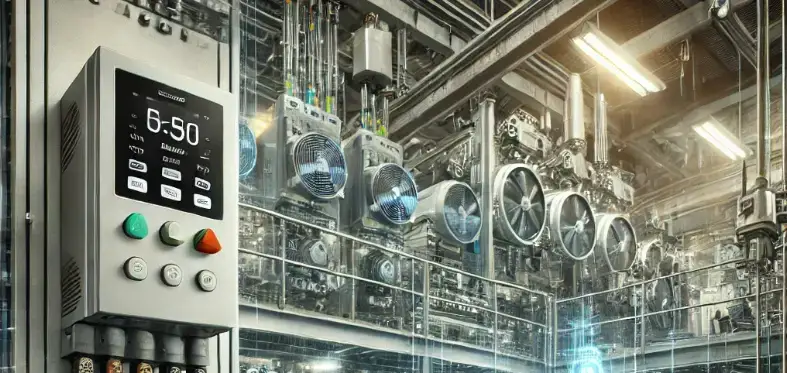
In industrial settings, precise control over machinery and processes is essential for maintaining productivity and minimizing downtime. Variable Frequency Drives (VFDs) offer enhanced control over motor speeds, making them invaluable for industries ranging from manufacturing to water management. This blog examines how VFDs from brands like Lovato, Eaton, Invertek, and LS Electric contribute to improving process control in real-world applications.
How VFDs Enhance Process Control
VFDs allow for precise adjustment of motor speed based on real-time system requirements. This ensures that machinery operates at optimal conditions, leading to improved efficiency and reduced wear and tear.
Example: A bottling plant uses Eaton VFDs to control the speed of conveyor belts. During high-demand periods, the system increases motor speed to maintain production output. When demand slows, the conveyor speed is reduced, preventing bottlenecks and ensuring that the entire system operates smoothly.
Key Features that Improve Control
PID Control: Proportional-Integral-Derivative (PID) controllers, found in many VFDs like those from LS Electric and Lovato, automatically adjust motor speed based on process feedback. This is crucial in industries like water treatment, where maintaining a steady flow rate is essential.
Soft Start and Stop: This feature prevents abrupt starts and stops, reducing wear on motors and associated machinery. In the case of a large-scale HVAC system using Invertek VFDs, soft-start functionality reduces the risk of electrical spikes, extending the life of the system.
Real-World Example
Water Treatment Plant: A water treatment facility integrated Lovato VFDs into its pump control systems to regulate water flow. By using PID control, the pumps adjust automatically to maintain consistent pressure, even as demand fluctuates throughout the day. This results in more stable operations and prevents pump damage due to pressure surges.
Manufacturing: In the automotive industry, Invertek drives are used to control robotic arms on production lines. The precise motor control allows the arms to perform complex movements at varying speeds, improving production efficiency and reducing errors.
Conclusion
For industries that rely on precision, reliability, and flexibility in motor control, VFDs are an essential tool. Whether it’s preventing costly downtime or ensuring smooth operations, VFDs from manufacturers like Eaton, Lovato, Invertek, and LS Electric provide the advanced control needed to keep industrial processes running efficiently.